Enjoyed this post?
Be sure to subscribe to the nopAccelerate newsletter and get regular updates about awesome posts just like this one and more!







eCommerce is no longer just about launching an online store. By 2026, digital commerce is projected to reach $6.4 to $6.9 trillion, growing around 7–8% annually. But the real shift is not only growth, it’s rising complexity. Businesses now operate across multiple channels, regions, customer types, and connected systems, making basic plug-and-play platforms increasingly restrictive.
Modern commerce requires more than templates and apps. Companies need platforms that support custom pricing, B2B workflows, ERP and CRM integrations, AI-driven personalization, performance at scale, and cloud-ready deployment. In short, eCommerce systems must function as long-term digital infrastructure, not just storefront software.
Built on ASP.NET Core and designed for full customization, nopCommerce enables businesses to build high-performance commerce systems without platform dependency or recurring licensing limits.
If you are evaluating nopCommerce development, this guide explains the features, technology stack, development process, costs, challenges, and future growth potential that matter.
nopCommerce is an open-source eCommerce platform built on ASP.NET Core and designed for businesses that need flexibility and customization without recurring platform licensing fees.
Launched in 2008, nopCommerce has evolved into one of the most mature .NET-based eCommerce platforms in the market. It is widely used by startups, SMBs, and enterprise-level businesses that require:
Unlike SaaS platforms, where businesses operate within predefined limitations, nopCommerce allows complete ownership and customization of the online store. Instead of forcing companies to adjust their operations to platform constraints, it enables developers to shape the system around the business.
Today’s businesses operate in a fast-changing digital environment where customer expectations, operational complexity, and technology demands continue to grow. As companies expand across markets and customer segments, they need ecommerce platforms that can adapt, integrate, and scale without forcing major system changes every few years.
Modern businesses demand:
Many SaaS platforms restrict backend flexibility, making it difficult to implement advanced workflows or connect core business systems. nopCommerce, on the other hand, provides a strong, extensible foundation that can evolve alongside business requirements.
Built on ASP.NET Core, nopCommerce offers enterprise-level stability, performance, and security, making it well-suited for long-term digital commerce strategies rather than short-term solutions.
nopCommerce is not for everyone and that’s actually its strength.
It is ideal for:
If you are looking for plug-and-play simplicity with minimal customization, a SaaS platform may be enough. But if you need flexibility and long-term scalability, nopCommerce development becomes a strong strategic choice.
For a deeper breakdown of business fit and use cases, explore our detailed guide on who nopCommerce is ideal for.
One of the biggest advantages of nopCommerce development is its versatility. It can support a wide range of business models and commerce scenarios, making it suitable for companies with diverse operational needs.
You can build:
Its modular architecture allows businesses to extend functionality through plugins or custom development, ensuring the platform can evolve alongside changing business requirements.
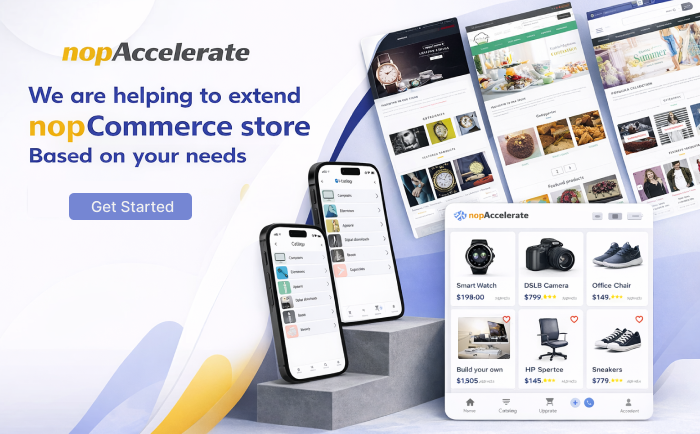
Understanding the nopCommerce technology stack is important when evaluating its scalability, performance, and long-term maintainability.
nopCommerce is built on ASP.NET Core, one of the most powerful and performance-optimized frameworks in the Microsoft ecosystem. It supports modern .NET versions, ensuring long-term maintainability and security.
It primarily uses Microsoft SQL Server but can be configured with other supported database systems depending on hosting requirements.
Built using Razor views with HTML, CSS, and JavaScript. Themes can be fully customized, allowing complete UI control.
nopCommerce follows a plugin-based modular architecture, meaning features can be added, modified, or removed without affecting the entire system.
You can deploy nopCommerce on:
This flexibility makes nopCommerce suitable for businesses with specific infrastructure preferences.
nopCommerce includes a wide range of built-in features that help reduce development time, lower costs, and simplify store management. These capabilities make it a strong and reliable choice for businesses investing in long-term eCommerce development.
Run multiple storefronts from a single admin panel while maintaining separate catalogs and branding.
Vendors can manage products, orders, and profiles through dedicated dashboards.
Supports international expansion with localization and currency configuration.
Unlimited categories, product attributes, variants, and inventory tracking.
Search engine-friendly URLs, meta tag management, sitemap generation, and structured navigation help improve search visibility.
Built-in discount rules, coupon codes, reward points, and promotional pricing.
Supports multiple payment gateways and custom shipping methods.
Assign different permissions to administrators and staff members.
Sales reports, order statistics, and customer insights for performance monitoring.
AI-assisted content generation and SEO support streamline catalog publishing.
Native Request-For-Quote (RFQ) and quote management capabilities support hybrid B2B + B2C commerce without plugins.
Features like mega menus and multiple wishlists improve storefront discovery and shopper engagement.
Cloudflare Images integration, .NET 9 performance gains, and accessibility enhancements (EAA support) help stores load faster and comply with modern standards.
Role-based permissions, SSL support, and a secure architecture based on ASP.NET Core.
nopCommerce development is a structured engineering process that aligns business goals, technical architecture, and long-term scalability. Below is how serious commerce projects are actually built.
Define what the platform must support today and in the future.
Includes:
Outcome: A clear commerce blueprint guiding all development decisions.
Plan the foundation that ensures scalability and upgrade safety.
Includes:
Outcome: A future-ready technical foundation.
Design for usability, conversion, and performance.
Includes:
Outcome: A conversion-ready user experience.
Build and tailor the platform to business workflows.
Includes:
Outcome: A commerce engine aligned with business logic.
Connect nopCommerce with the broader business ecosystem.
Includes:
Outcome: Seamless system communication without data silos.
Ensure stability, speed, and protection before launch.
Includes:
Outcome: A secure, high-performance production-ready store.
Launch with control and risk management.
Includes:
Outcome: A stable and controlled go-live.
Development does not end at launch.
Includes:
Outcome: A platform that evolves with business growth.
Choosing the right nopCommerce development company is critical to avoid technical debt and long-term performance issues.
For official documentation and updates, refer to the nopCommerce website.
If you need support with upgrades, migration, or custom development, nopAccelerate can be your trusted technology partner.
One of the most common questions is: How much does nopCommerce development cost?
Since the platform itself is open-source, there is no licensing fee. However, development costs depend on project complexity, customization level, and integration requirements.
Typically ranges from $500 to $5,000, depending on customization and design.
Can range between $10,000 and $40,000, depending on integrations and features.
May exceed $50,000+ when involving complex architecture and third-party integrations.
Hosting: $20 to $300+ per month, depending on infrastructure
Premium themes & plugins: Varies
Maintenance & support: Ongoing cost depending on scope
Compared to SaaS platforms with recurring subscription fees and transaction charges, nopCommerce offers long-term cost control and ownership.
Common challenges include:
These risks are not platform limitations, they are execution challenges. With structured architecture, plugin-based development, and experienced oversight, they can be effectively managed.
As digital commerce becomes more connected and data-driven, nopCommerce development is shifting from basic store implementation to long-term commerce engineering.
Future nopCommerce development will focus on:
The future is not about rebuilding platforms, it is about building them correctly from the start. When structured with scalability, integrations, and extensibility in mind, nopCommerce becomes more than a store.
nopCommerce is not just another eCommerce platform. It is a powerful, open-source ecommerce framework built for businesses that value flexibility, ownership, and long-term scalability.
With the right development strategy and nopCommerce technical expertise, it can support everything from growing online stores to enterprise-grade, integration-driven digital commerce ecosystems.
If long-term growth, customization, and control matter to your business, nopCommerce deserves serious consideration in your platform evaluation.
Many eCommerce platforms make you:
“Change your process to fit the tool.”
nopCommerce allows you to:
“Shape the tool to fit your process.”
When implemented correctly, it becomes more than a store; it becomes a strategic commerce foundation.









Leave A Comment